Saturday, 20 August 2011

July and August – Buff Footman

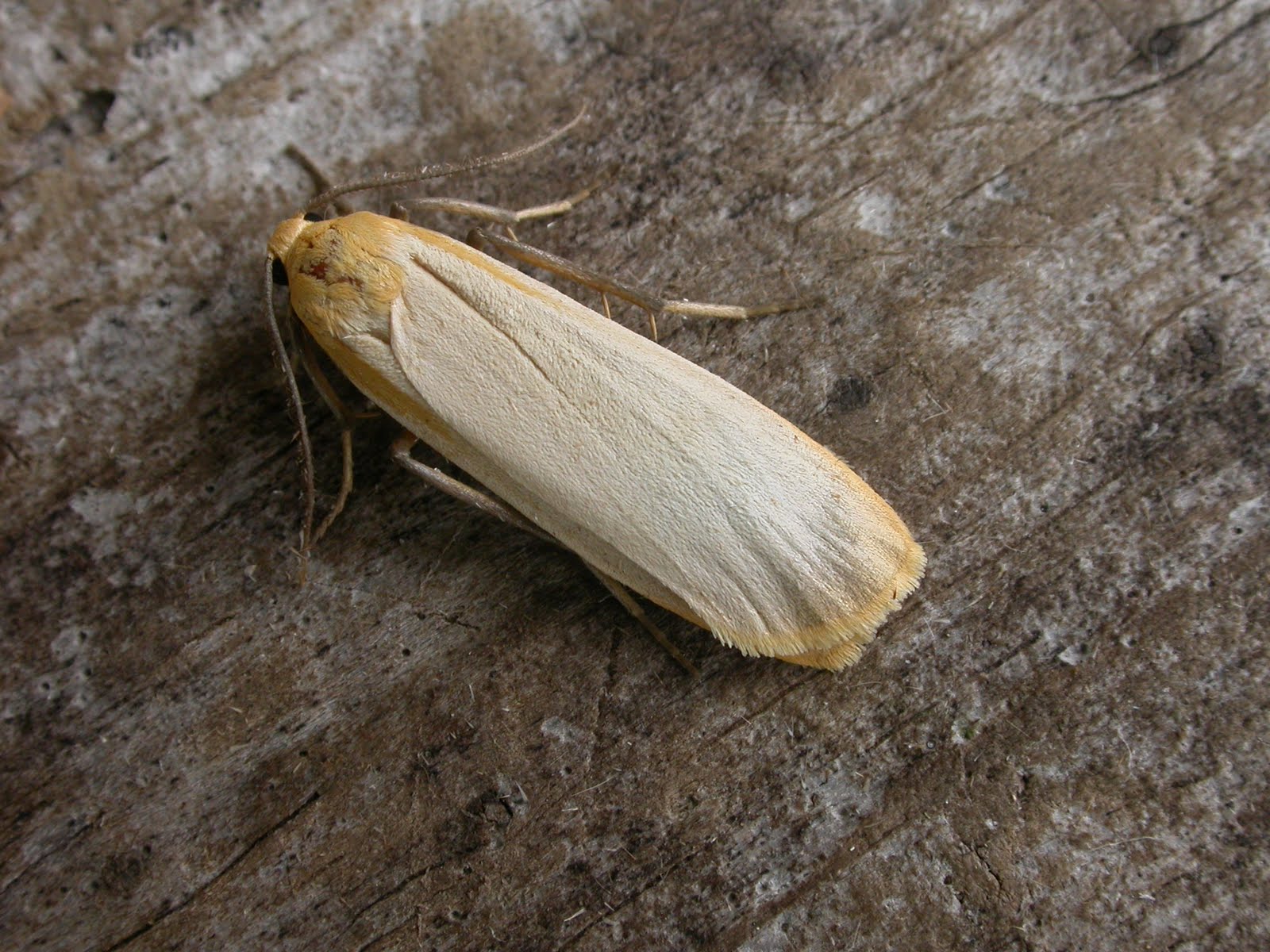
Perhaps the moth find of the year for Stirlingshire and West Perthshire is the Buff Footman. I was lucky enough to find the first at Lennoxtown on the 11th July, another was caught by David Bryant at Bridge of Allan on 11th August and I identified a third in the catch for the 2nd August of the Rothamsted trap at Rowardennan on Loch Lomondside.  Thus the species is now recorded in vc86 and 87.

Central Scotland is accumulating an impressive list of species that have moved into the region in the 21st century. They include in rough order of appearance Pale Prominent (actually first recorded in  1995), Red-necked Footman, Slender Brindle, Ypsolopha sequella, Alder Moth, Copper Underwing, Oak-tree Pug, Pale Pinion, Lesser Treble-bar and now Buff Footman. The spread of Red-necked Footman, Slender Brindle and Pale Pinion was dramatic but that of Buff footman appears to be even more impressive. The map for the species in The Moths and Butterflies of Great Britain and Ireland vol 9 (Harley Books) shows that in 1978 the species had a patchy distribution mainly south of a line from the Severn to the Wash. However, The Provisional Atlas of the UK’s Larger Moths, produced in response to the National Moth Recording Scheme (Hill et al , 2010. Butterfly Conservation), shows considerable northward expansion. Steve Palmer (pers. comm.) informs me that the first authenticated record in Lancashire came in 2000 and that it is now recorded in good numbers throughout the county particularly in the north. The Tullie House Museum, that currently holds the Cumbria moth database, has records from across the county dating from 1999 and the first record in Scotland would appear to be from Forest Moor, Wigtownshire (vc74) in 2006 (Dumfries and Galloway Moths website). In 2008, the species had spread to vc73, Kirkcudbrightshire, where it is now recorded at multiple sites and, in some, is so well established that there have been single trap counts of up to15 (G. Chambers, pers. comm.). Oddly, there appear to be no known records from Dumfriesshire (vc72) but from near Kelso in adjacent vc80 it has been recorded annually since 2009. In addition, there is a single 2009 record from Ayrshire (N. Gregory, pers. comm.). Thus, it appears that the species is spreading rapidly in southern Scotland and has now reached the central belt.
With all of the species moving north, is tempting to see their movement north as a response to climate warming or, in the case of Red-necked and Buff Footman, to the cleaner air that supports lichen growth. However, Roy Leverton has pointed out that the factors supporting northward range extension must be more complicated because, both Dingy and Scarce Footman both occurred further north than Buff Footman in 1978 but they have not spread to central Scotland.
27th July Thyme Pug

One of the outstanding discoveries of the late Iain Christie in 1981 and 1982 was an inland colony of Thyme Pug on Conic Hill near Balmaha at the south eastern corner of Loch Lomond. I have made several attempts to rediscover this colony and have covered a lot of ground on Conic Hill without finding much Thyme let alone Thyme Pug (although I did find Bog Orchid). Earlier this year however I discovered that the label "Conic Hill" on Iain's specimens might be a little misleading as I found a lot of Thyme not on the main body of the hill but on a ridge to the NW labelled  Druim nam Buraich on the OS Explorer Map. On the 27th July in two hours on this ridge tapping thyme plants over a lunch box I recovered two small caterpillars which at the time I was uncertain about but which matured into Thyme Pug larvae. Hopefully adults will emerge in 2012.

29/30th July Lesser Treble-bar

Over the years a number of claims for Lesser Treble-bar in the region have not been presented with the evidence necessary to add a new species to a vice county list. This all changed on 29th and 30th July when Bob and Helen Dawson found a colony associated with extensive St John’s Wort on Fallin bing near Stirling

20th July – Grass Emerald

Arthur and Jane Jones recorded a Grass Emerald in Jubilee Pine Woods in the Trossachs.

White-pinion Spotted - not in our patch but not far away

Pat Thompson found a White-pinion Spotted in East Kilbride in May. This is not quite in our patch. However, it could be yet another species moving north so we should all be alert to the possibility.

Tuesday, 7 June 2011

6th May – Bilberry Pug


The Bilberry Pug is apparently a rare moth in Scotland. The Provisional Atlas shows only two dots; one in Dumfriesshire and the other in vc86 in the oak woods of east Loch Lomondside where about 50 a year are caught in the Rothamsted trap at Rowardennan. I believe that the species may be over-looked elsewhere and that this may in part be because some illustrations, particularly that in Waring et al are misleadingly green. One of the illustrations shows dead individuals from the Rothamsted trap. They are invariably the buff colour shown. I have never detected any green in any individual caught by this trap. It is possible that the killing fluid used in Rothamsted traps causes discolouration although it does not do so with emeralds. This year I have bred the species and my second slide shows an individual that emerged on 6th May. It shows a delicate green background colouration but is nowhere near as green as is illustrated in Waring et al. To judge from this one individual, the photographs in Skinner and in Riley and Prior are much more accurate.

3rd May, !4th August and 1st September - Marsh Pug

In central Scotland the day-flying Marsh Pug is an enigmatic species. Its preferred foodplant, Field Mouse-ear is rare or absent from vice counties 86,87 and 99. Nevertheless, there are records from the region and these are mainly centred around the damp meadows south of Loch Lomond particularly those near the mouth of the Endrick Water. There have been no records since1983 until on the third of June, on a very muggy night, Martin Culshaw caught one coming to light at his house which is near the junction of Blane Water and Endrick Water (the species only comes to light on very muggy nights).
Furthermore, on the 14th August he found another on his garden fence proving that the species can be double-brooded in the area. I have searched the fields around Martin’s house. Common Mouse-ear (Cerastium fontanum) is abundant and a couple of plants of Sticky Mouse-ear (Cerastium glomeratum) were found but there was no Field Mouse-ear. These were the first records for vice county 86 although, as indicated above, most of the records from vc99 are also from the environs of the Endrick Water.

On 1st September, Neil Gregory caught one in a totally new area of vc99, namely Carman Muir.